

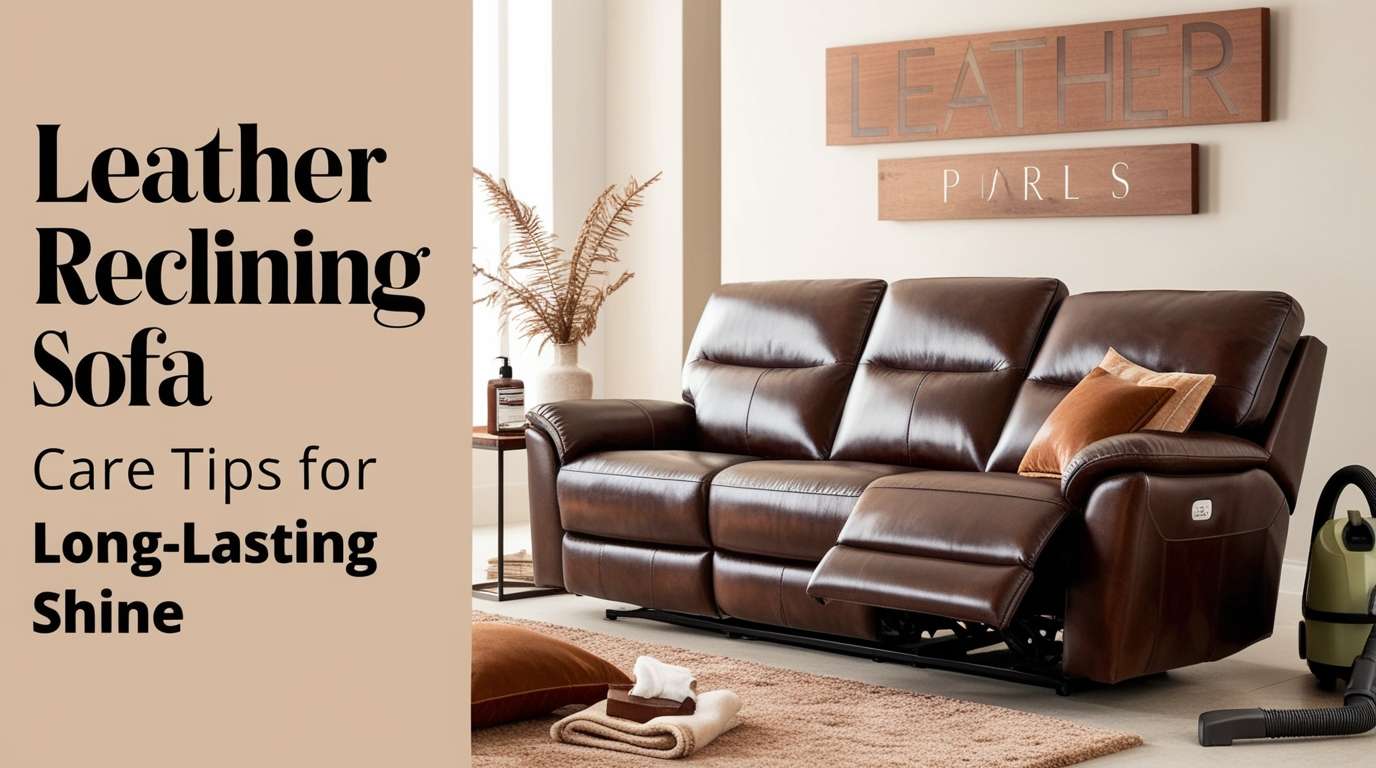
A leather reclining sofa is something that adds grace and coziness as well as comfort to a living space. This furniture is a heavy investment, and with proper maintenance, these products will be forever beautiful.
Leather requires special care to stay soft and shiny. Knowledge of the appropriate maintenance practices will ensure there is protection of the material as well as longevity of the sofa.
Different Leather Finishes
Not all leather is the same. Other sofas have aniline leather, which means treatment is limited to a few marks and is natural. Others are equipped with semi-aniline or guarded leather that has additional finishes.
Guaranteed leather will not stain easily, but its appearance might differ slightly. It is good to consult the manufacturer's information to determine the type of leather. It is this understanding that defines the best cleaning products and processes.
Why Leather Needs Care
Leather is a natural material that may dry over time. Unless taken care of, it also develops cracks and becomes colorless and hard. These problems are avoided by giving regular maintenance. The subject requires humidity and coverage in order to remain healthy. The care of leather should be thought of just like skin care; look after it, and it will look like diamonds.
Quick Cleaning Routine
Lather surfaces are subject to dust and dirt daily. Wiping the sofa with a dry cloth leaves the particles of the sofa. This is a basic measure that prevents dirt from accumulating in the leather's pores. A microfiber cloth is efficient because it does not scratch the surface, as it traps dust.
Crevices and seams are accessed with a soft brush vacuum after every week. This eliminates crumbs, pet hair, and garbage that would not be picked up by regular wiping. The reclining mechanism should be given special consideration because dirt accumulates in these moving mechanisms.
Spill Response in Real Time
Spills occur particularly on frequently used furniture. Stains can be avoided by fast action. Immediate blotting of liquid spills with a clean absorbent cloth prevents the liquid from penetrating into the leather. Do not rub; it dispenses the spillage and penetrates further into the material.
For sticky materials, scrub them off with a plastic card or spatula. A damp cloth is used to follow up with the leftover residue. This should be wiped well with a clean towel.
Choosing the Right Cleaner
Cleaners that are used on leather are specific to leather. Cleaning can also destroy and discolor leather, as well as dehumidify it in the house by housekeepers. The cleaner should read product labels to ensure the leather type matches.
Some manufacturers make their own cleaning products designed for their furniture. These products will be covered under warranty and compatible with the leather finish.
The Cleaning Process
The first thing is to try any cleaner in some hidden spot to avoid the base. Place it in small amounts in an inconspicuous place and observe for 24 hours to see if it causes an adverse reaction.
When one is ready to clean, pour the leather cleaner on top of a soft cloth, not right on the sofa. A patient works in small parts; circular motions should be mild. Do not moisturize the leather with too much water. Once each part is cleaned, rub with a clean and wet towel and remove residue. Let the leather dry up, and then use it.
Why Conditioning Matters
Leather conditioning is done with natural oils that evaporate over time. Lacking conditioning directly makes leather dry, brittle, and prone to cracking. Conditioners can restore shine and keep the material flexible.
The majority of leather reclining sofas are conditioned after six to twelve months. A frequent treatment might be required for high-use pieces or furniture in dry climates. Indications of leather conditioning requirements are dullness, stiffness, or lightness cracking.
How to Apply Conditioner
Leather conditioner must be put on and not overdone. A little goes a long way. Apply the conditioner in fine layers and spread it over the whole surface evenly using a soft cloth. Pay attention to the book parts that are worn out or dry.
Allow conditioner to dry in accordance with what it says on the product package, most often 15 to 30 minutes. Use a clean, dry cloth to wipe the surplus. This brings out its natural shine on the leather and does not leave behind a sticky substance from the conditioner.
Sunlight and Heat
Leather color fades in direct sunlight, and the material dries up. The arrangement of sofas out of the window light minimizes sun exposure. Provided that it is impossible to avoid the sun, the sun can be blocked by means of curtains or blinds at the time when the sun is at its most intense.
Leather is also dried by sources of heat such as radiators and fireplaces. At least 2 feet of spacing between the heat sources and the sofa is critical to avoid damage. Humidity levels can be mitigated using the air conditioning system and heating system, and in order to ensure that the leather is not dry, one can use a humidifier in environments where there is a lot of dryness.
Removal of scratches
Leather will be scratched or torn by sharp objects, pet paws, and coarse materials. Nails of pets should be trimmed in order to minimize the chances of being scratched. By sitting on the sofa, one can avoid injuries by wearing clothes with sharp buckles or studs.
It is advisable to place throws or blankets in high-traffic areas in order to provide a protective layer. They can be washed every day and still have the leather at the bottom covered. These coverings, however, are breathable to prevent moisture accumulation.
Keeping Moving Parts Clean
The reclining action gathers dust and debris, which could interfere with functionality. Hinges and joints should be cleaned by creating a regular vacuum around them. Particles stuck in tight areas can be removed with a soft brush.
Oiling the moving metal parts annually helps ensure the mechanism continues to operate smoothly. A silicone lubricant prevents rust and minimizes wear. The lubricant should not come into contact with the leather.
Checking for Wear
The reclining sofas have connection points that stress between sections. Regular inspection of such areas uncovers issues early. Loose screws in it, wear and tear to be replaced immediately to prevent more damage.
Regular maintenance yields the best results. Leather furniture must be of good quality and can be cared for decades.
A leather reclining sofa is something that adds grace and coziness as well as comfort to a living space. This furniture is a heavy investment, and with proper maintenance, these products will be forever beautiful. Leather requires special care to stay soft and shiny. Knowledge of the appropriate maintenance practices will ensure there is protection of the material as well as longevity of the sofa. What to know about your Type of Leather Different Leather Finishes Not all leather is the same. Other sofas have aniline leather, which means treatment is limited to a few marks and is natural. Others are equipped with semi-aniline or guarded leather that has additional finishes. Guaranteed leather will not stain easily, but its appearance might differ slightly. It is good to consult the manufacturer's information to determine the type of leather. It is this understanding that defines the best cleaning products and processes. Why Leather Needs Care Leather is a natural material that may dry over time. Unless taken care of, it also develops cracks and becomes colorless and hard. These problems are avoided by giving regular maintenance. The subject requires humidity and coverage in order to remain healthy. The care of leather should be thought of just like skin care; look after it, and it will look like diamonds. Care tasks for daily and weekly basis Quick Cleaning Routine Lather surfaces are subject to dust and dirt daily. Wiping the sofa with a dry cloth leaves the particles of the sofa. This is a basic measure that prevents dirt from accumulating in the leather's pores. A microfiber cloth is efficient because it does not scratch the surface, as it traps dust. Crevices and seams are accessed with a soft brush vacuum after every week. This eliminates crumbs, pet hair, and garbage that would not be picked up by regular wiping. The reclining mechanism should be given special consideration because dirt accumulates in these moving mechanisms. Spill Response in Real Time Spills occur particularly on frequently used furniture. Stains can be avoided by fast action. Immediate blotting of liquid spills with a clean absorbent cloth prevents the liquid from penetrating into the leather. Do not rub; it dispenses the spillage and penetrates further into the material. For sticky materials, scrub them off with a plastic card or spatula. A damp cloth is used to follow up with the leftover residue. This should be wiped well with a clean towel. Cleaning Methods Choosing the Right Cleaner Cleaners that are used on leather are specific to leather. Cleaning can also destroy and discolor leather, as well as dehumidify it in the house by housekeepers. The cleaner should read product labels to ensure the leather type matches. Some manufacturers make their own cleaning products designed for their furniture. These products will be covered under warranty and compatible with the leather finish. The Cleaning Process The first thing is to try any cleaner in some hidden spot to avoid the base. Place it in small amounts in an inconspicuous place and observe for 24 hours to see if it causes an adverse reaction. When one is ready to clean, pour the leather cleaner on top of a soft cloth, not right on the sofa. A patient works in small parts; circular motions should be mild. Do not moisturize the leather with too much water. Once each part is cleaned, rub with a clean and wet towel and remove residue. Let the leather dry up, and then use it. Conditioning for Softness Why Conditioning Matters Leather conditioning is done with natural oils that evaporate over time. Lacking conditioning directly makes leather dry, brittle, and prone to cracking. Conditioners can restore shine and keep the material flexible. The majority of leather reclining sofas are conditioned after six to twelve months. A frequent treatment might be required for high-use pieces or furniture in dry climates. Indications of leather conditioning requirements are dullness, stiffness, or lightness cracking. How to Apply Conditioner Leather conditioner must be put on and not overdone. A little goes a long way. Apply the conditioner in fine layers and spread it over the whole surface evenly using a soft cloth. Pay attention to the book parts that are worn out or dry. Allow conditioner to dry in accordance with what it says on the product package, most often 15 to 30 minutes. Use a clean, dry cloth to wipe the surplus. This brings out its natural shine on the leather and does not leave behind a sticky substance from the conditioner. Protection from Damage Sunlight and Heat Leather color fades in direct sunlight, and the material dries up. The arrangement of sofas out of the window light minimizes sun exposure. Provided that it is impossible to avoid the sun, the sun can be blocked by means of curtains or blinds at the time when the sun is at its most intense. Leather is also dried by sources of heat such as radiators and fireplaces. At least 2 feet of spacing between the heat sources and the sofa is critical to avoid damage. Humidity levels can be mitigated using the air conditioning system and heating system, and in order to ensure that the leather is not dry, one can use a humidifier in environments where there is a lot of dryness. Removal of scratches Leather will be scratched or torn by sharp objects, pet paws, and coarse materials. Nails of pets should be trimmed in order to minimize the chances of being scratched. By sitting on the sofa, one can avoid injuries by wearing clothes with sharp buckles or studs. It is advisable to place throws or blankets in high-traffic areas in order to provide a protective layer. They can be washed every day and still have the leather at the bottom covered. These coverings, however, are breathable to prevent moisture accumulation. Working with the Reclining Mechanism Keeping Moving Parts Clean The reclining action gathers dust and debris, which could interfere with functionality. Hinges and joints should be cleaned by creating a regular vacuum around them. Particles stuck in tight areas can be removed with a soft brush. Oiling the moving metal parts annually helps ensure the mechanism continues to operate smoothly. A silicone lubricant prevents rust and minimizes wear. The lubricant should not come into contact with the leather. Checking for Wear The reclining sofas have connection points that stress between sections. Regular inspection of such areas uncovers issues early. Loose screws in it, wear and tear to be replaced immediately to prevent more damage. Conclusion Regular maintenance yields the best results. Leather furniture must be of good quality and can be cared for decades.
READ FULLThe development of reclining sofas is no longer bulky and old-fashioned. Furniture manufacturers are now changing these comfort items into styles that suit the modern homes perfectly. Modern reclining sofas are both functional and fashionable, with features that have never been considered before. The knowledge of the existing trend assists buyers in making conscious decisions that not only address the needs of comfort but also design. Sleek and Slim Designs Goodbye to Bulky Frames Conventional reclining sofas had a large, heavy look. The present designs emphasize lower profiles that appear lighter and occupy less space. Manufacturers adopt advanced engineering to conceal reclining features within thinner frames. The outcome is furniture that looks like an ordinary sofa until the reclining feature is needed. Such thin frames are good in compact dwellings. Furniture in apartments and small houses does not overcrowd the room and is comfortable. Moving around and positioning is also easy due to the decreased bulk. Making Clean and Making Simple. Contemporary reclining sofas prefer simple geometric designs over decorative ones. Straight edges, minimal tufting, and smooth surfaces make contemporary looks. Arms are long and curved, rather than rolled or overweight. It is a good design solution for minimalist, modern interior design, focusing on a clean look. Smart Technology Adaptation Built-In Power Features Built-in recliners that operate using button control have become ordinary, and not a special thing. Most models come with USB ports and electrical outlets embedded in the armrests or the sides. The additions enable making charges to phones, tablets, and others without the need to get off the sofa. Certain sophisticated models have memory features that store the positions of preferred reclining positions. The mechanical lever has been replaced with touch controls, which look much cleaner and are easier to use. Premium smart home models are showing compatibility with voice control. Heating and Massage Functions Reclining sofas are becoming more of a therapeutic feature. Embedded heating units heat specific areas, such as the lumbar region or the chair. The types of functions performed by massage range from the most basic, which involve vibration, to more complex styles that target various muscle groups. These health-conscious features outfit sofas with relaxation stations. The essence of home massage and heat after hard-working days is the relief from the hassle of traveling to spas and healing centers. Sustainable materials Furniture buyers are more sensitive to environmental concerns. The manufacturers respond by making reclining sofas from sustainable materials. Responsible wood frames or recycled-metal frames reduce ecological footprints. New upholstery fabrics are offered with the choice of recycling plastics, organic cotton, and leather alternatives made from plants. Such materials are performing well and at the same time addressing the environmental issues. The labels of low chemical use and sustainable practices help buyers find friendly options. Sturdiness as Sustainability The decision to make furniture durable is, in itself, an environmental decision. The high-quality construction of sofas means they do not need to be replaced very often. Manufacturers are concerned with durable mechanisms, strong frames, and durable fabrics. It is a method that enhances long-term value and minimizes waste. Standardized and Customizable Structures Customizable Arrangements Modular reclining sofas offer customers the opportunity to design their forms to best fit their area. Separate sections may be formed in many different ways. The size and shape are altered by adding or removing pieces as needs change. This flexibility also suits individuals who are mobile or expect to keep on changing their living conditions. More cost-effective and sustainable than purchasing all new furniture is reconfiguring old furniture. Mix and Match Components A few manufacturers have more than one recliner position in the sectional arrangements. It is possible not to have all the seats recline, as it is essential to customize them to suit how various members of the family use the pieces. Corner wedges, armless chairs, and console pieces can be combined in endless ways. Bold Colors and Textures Exploring Colors Beyond Neutral Beige, brown, and gray are commonly used, but vibrant colors are increasingly used. Bluish shades, deep, fascinating greens, comfortable terracottas, and even gem shades are used in existing collections. Such daring decisions turn reclining sofas into seat-forward furniture and not backs identified as an accent. Color can be personal to the space and can reflect the personal style. Customers are bolder in selecting unique colors because reclining sofas are generally more fashionable. Interesting Textiles and Cloths There is an increase in the variety of textures. Stain and wear-resistant performance fabrics are available in a variety of weaves and finishes. The leather variations are smooth and polished as well as distressed and rough. The textures are combined in modular systems to add visual interest. The furniture is personalized through contrasting colors or by mixing leather and fabric. Space-Saving Innovations Wall-Hugger Technology Wall-hugger or zero-clearance recliners are those that sit close to the wall and require minimal space to recline. The back reclines as the chair moves forward, so one does not need to be several feet behind the sofa. This new technology offers reclining sofa options for rooms with limited space. Small apartments and other houses are very well suited to this technology. When there is no longer any need to avoid walls, furniture placement becomes more flexible. Small Reclining Mechanisms The engineering solutions have made the space reclining mechanisms less demanding. Contemporary designs recline fully with a reduced footprint. There are models with infinite reclining seats instead of two or three, and the user can find an exact position. Multi-Purpose Functionality Built-In Storage Solutions The armrests, consoles, and under-seat areas have hidden storage. Such areas contain remotes, magazines, blankets, and other vital items in the living room. Having things organized and readily available makes work in a room easier and reduces disorder. Consoles between seating will usually include cup holders, storage trays, and cooler cup holders. These are functional extensions that make the sofa more useful as an entertainment center. Convertible Sleep Options This type of reclining sofa also has fold-down or pull-out sections, and the overnights use these. This two-purpose item eliminates the need to purchase separate guest-room furnishings in smaller houses. The sofa is used as a day-to-day seating furniture with an intermittent sleep area. Conclusion The design of reclining sofas is improving rapidly. The trends present indicate evolving lifestyles in which home furniture serves multiple purposes. Sofas that enable one to relax are no more; they are entertainment spots, electricity points, and style statements. Contemporary choices are compatible, as comfort and style go hand in hand.
READ FULLA TV lounge or a home theatre is incomplete without some key items, and a theatre recliner is one of them. People literally save money for it, and everyone knows why they do that. People love to watch their favourite TV programs, sports, movies, and many spend hours reading books. It is like one gets almost everything in terms of comfort and facilities in a single item known as a theatre recliner. Are you also about to purchase it? Here is what you need to have a look at before you go ahead. Primary Features or Ergonomics of a Recliner Ergonomics is the primary feature people look for. If there is no comfort, there will be no need for theatre recliners. That is why people focus on the core benefits, which are mostly about the comfort level. • Headrest The headrest’s thickness, material quality, and expandability are the things people measure first. Lying on a theatre recliner demands relaxation, which comes when the head rests completely. The headrest has to be adjustable for each type of person who sits on it. • Footrest The same is with the footrest, which takes on the other end of the body. Not only does the head need stable support, but the feet do as well. That is why the expandability of the footrest through adjustable options is mandatory. Some people expand their legs fully, and some do not. If the headrest and footrest are adjustable and comfortable, that means the purpose of buying a theatre recliner is somehow fulfilled. • Armrests The remaining comfort comes from the armrests, which have to be in the optimum position. Moreover, the softness and stability are the main concerns people have when buying theatre recliners. Since armrests are supposed to have more features, you will read them in the secondary features section ahead. • Single or Loveseat Theatre Recliner Some people live alone, and some live with their families. Most people buy theatre recliners for individual needs, which is all about their personal requirements. However, couples want theatre recliners that can accommodate both. Therefore, loveseat theatre recliners are also popular in the industry. This design creates better bonding in couples, whether they are newlyweds or senior ones. • Reclining Mechanism Then comes the reclining mechanism, which is the second most important factor in the selection process. The base of theatre recliners differs, which is why one can find popular types below. • Wall hugger • Non-wall hugger • Swivel • Push-back If you want an automatic mechanism without any space issue, a wall-hugger type is better. It will take slightly more space when you expand it, but the comfort and features are really good. Besides, a non-wall-hugger has a fixed position, and the sofa slides on a fixed position to offer the same reclining features. The thing is, this one is suitable for small spaces. A swivel mechanism allows a person to rotate and tilt the theatre recliner 360 degrees. It is usually manual, but the comfort is great in it. Besides, there is a push-back type, which is the most basic and manual for people who want a simple design. It also stretches its headrest and footrest, but the base is like a classic sofa. Upholstery Material and Color Then the material type and color selection come, which is a kind of secondary feature. Anyway, let’s talk about it. Some people choose genuine leather, and some go for faux leather, polyester, cotton, velvet, and microfiber. The genuine leather is luxurious, more durable, and also costlier. The other three are also great, but the durability factor and maintenance requirements are different. It depends on your budget to decide what you prefer. Do You Need a Power-Lift System? Then some people look for a power lift system, which helps them come out of the recliner effortlessly. All they have to do is press a button, and the theatre recliner tilts to eject the person out of it. If you have more budget, this is a really nice feature. Secondary Features That Make a Recliner Irresistible Then you have to look for secondary features, which focus on facilities. These facilities are the ones that add value to your activities, like reading books or watching TV/movies/podcasts. Especially when people watch movies, they desperately need the features below. • Cup Holder and Tray Holder Watching a movie and not having cravings for food and beverages is rare. People want something like a soft drink, popcorn, a burger, a dessert, and chips to make their moment more enjoyable. For such cravings, people need a cup holder, a tray holder, and also some additional holders, depending on the cravings. Some like to chew gum, and they possibly need some holders for candies, gums, and chocolates. • LED System People also want an LED system for ambience and navigation purposes. It is not easy to find your way in a dark room when watching a movie. Therefore, some want an LED system under the recliner sofa to get some light on the ground. • USB Ports for Gadgets USB ports are built-in features because they allow the recliner sofa to connect with a power source. That means the automatic features can’t work without USB ports. Also, gadgets need charging or connectivity, whether they are smartphones or laptops. • Storage for Remote and Snacks There should be side pockets or storage for a remote or snacks. Chocolate, sesame, and peanut caramel bars are often eaten when watching TV, especially sports and movies. People need space to stack their recliner sofas with such snacks, and also a remote for sports. • Massage System The massage system is the best feature one gets in a recliner sofa. Not every sofa has this feature because it is a special one. If you can bear the cost, the massage system is what every working person needs. After a neck-breaking day, all a person wants is a recliner sofa with a massage system for soothing relaxation. Conclusion Choosing the right theatre recliner is about more than just comfort—it’s an investment in the overall viewing experience. By paying close attention to essential features like ergonomic support, durable materials, smooth reclining mechanisms, space-saving design, and easy maintenance, you can ensure long-term satisfaction and performance. Whether you’re furnishing a commercial cinema or a home theater, prioritizing quality and functionality will help you create a seating environment that keeps audiences relaxed and engaged. Use this buying guide as your roadmap, and you’ll be well-equipped to select theatre recliners that combine comfort, style, and reliability for years to come.
READ FULL